Hi All,
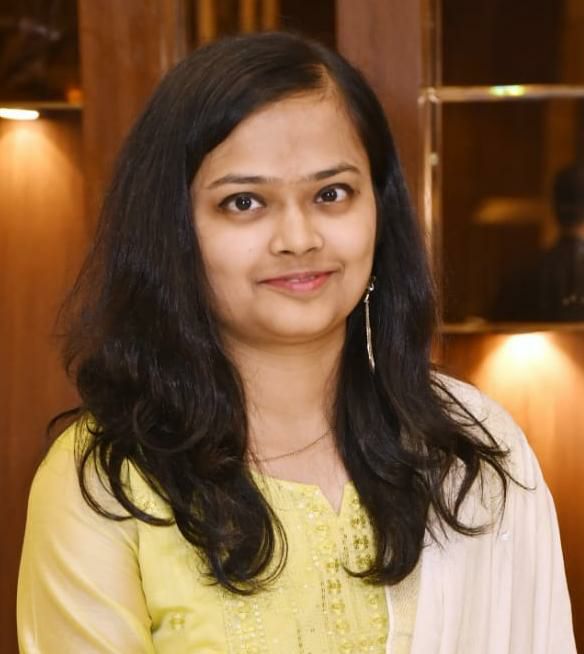
Himani Singhal toiled hard, never gave up and her perseverance finally paid off in her 6th attempt as she cracked CSE-21 with AIR-160. Following is her Economics strategy in her own words:
Hello everyone!
I’ll start with a brief introduction about myself. I am a resident of Delhi. I have done Economics (Honours) from Hansraj College (D.U.) (Batch of 2015), Masters in Economics from IGNOU (2017-2019). In 2019, I also cleared the UGC NET in Economics. Currently I am pursuing masters in HRM & LR from TISS, Mumbai. I don’t have any previous work-ex as I started UPSC preparation right after my graduation.

I took coaching in my first attempt, attended some classes for Economics optional too in the same institute and prepared the rest through self study.
My UPSC journey started in 2015 when I took coaching classes for one year. I gave my first attempt in 2016 in which I was unable to clear prelims. This was quite unexpected and shattering as I was expecting to clear the first stage after one year of rigorous study. This was when I first experienced the uncertainty associated with this exam.
But I decided to start again and joined a test series for mains. This helped me to cover the syllabus and avoid all the distractions and negative thoughts. In the 2nd and 4th attempt, I reached till the interview stage. Finally in my 6th attempt that is for CSE-2021, I cleared the examination with AIR 160.
Below is my strategy for Economics optional:
The foundation created during my graduation helped me to understand this optional and retain interest in it throughout my journey. Many topics I had read during my graduation and the syllabus, overlapped to some extent. I was able to grasp the advanced topics also after reading them twice or thrice. I used to begin my day with reading the optional. After I was done making the notes, I gave approximately 4 hours in a day for optional preparation including revision and analysing previous years question papers.
General Tips:
- Try to complete the exam and write all the answers.
- Highlight the important points, keywords.
- Graphs can be drawn with a pencil or a pen, but they should be neat and clearly labelled.
Paper 1:
I scored 161 in my 2017 attempt, 113 in 2019 attempt and 132 this time. The score is decent, neither too good nor too bad. Economics as an optional is quite technical and without any good coaching, the struggle is quite real, at least in the beginning.
So, I began my preparation with the books I have mentioned below and took generous help from topper’s notes like Abhimanyu Gahlaut (CSE-2015), Tejaswi Rana (CSE-2016), Abhijeet Sinha (CSE-2017), and Yash Jaluka (CSE-2020). Hence, my strategy borrows a lot from the toppers’ strategy, and I am highly grateful to all of them.
Micro:
- Cover HL Ahuja comprehensively.
- Hicks, Kaldor and Schitovsky welfare criteria are repeated frequently. Such topics can be covered in greater detail.
Macro:
- I used only HL Ahuja. People also use Richard Froyen to understand the subject from scratch. But due to my background in economics, I directly used HL Ahuja.
- For a few extra marks, a few facts/ terms from macroeconomic history can be memorized. These are given at end of almost every topic in HL Ahuja, note them and use them wherever possible in the exam.
- Name of papers of Keynes, Friedman etc can be written in the brackets.
- Some relevant quotes of Keynes and Friedman.
Join Decode Civils Telegram Group For Free UPSC CSE Guidance From Mudit Jain, IRS CSE 2017 (Ex-IPS CSE 2014 & 2015), Author of Decode Ethics and Decode History Books
Money and Banking: Used only HL Ahuja
Public Finance: Used HL Bhatia and Gaurav Aggarwal’s notes to cover the topics mentioned in syllabus.
International Trade: Read Salvatore comprehensively.
Growth and Development: For theories, read ML Jhingan and referred Gaurav Aggarwal’s notes.
General Tips for Paper 1:
- Make sure you see the previous year papers, analyse them, many topics are directly or indirectly repeated frequently. Prepare them beforehand.
- Write important 2-3 assumptions before explaining/ talking about any model.
- For paper 1, note making played a very important role for me. Since it’s almost entirely theory, notes help in revising and memorising the topics very quickly compared to reading from books.
- I devoted more time to revise macroeconomics, microeconomics, and international trade, then I used to pick development economics and finally public finance.
- Practice answer writing, diagrams, graphs. Diagrams and graphs assume great importance especially in paper 1, you can make a diagram and explain a model in a much better manner.
- Since I did not use any coaching for tests, I practiced from the previous year’s papers at home and analysed them using solved answers by toppers.
- I gave initial 5-8 minutes to select the questions I wanted to answer, then I used to attempt 20 and 15 markers first and finally 10 markers.
Paper 2:
My score hovered around 125 in all 3 mains that I gave. So, I may not be an expert for this paper, but still sharing some general tips that helped me.
Booklist for Paper 2:
- I began with reading Uma Kapila (thicker version), I have heard that the thinner version also works well. I referred the book very selectively for topics like poverty, privatization in later attempts.
- Economic survey (initially read the full-length official version, but in later attempts covered from GS score and Vision IAS summary). • Generous use of topper’s notes mentioned above.
- Vision IAS mains 365 for economics.
- Vision IAS economics sectional test series
- Used a business newspaper, initially business standard, later switched to The Mint.
- Also used RBI speeches and NITI Aayog’s Strategy@75.
General Tips for Paper 2:
- Analysing previous year question papers is irreplaceable. So, avoid skipping it.
- I used to write names of economists, data wherever possible.
- You can give reference of Economic survey, NITI Aayog in answers to increase credibility.
- Draw graphs and link with paper 1 topics as much as possible.
The type of questions being asked are changing y-o-y. In this attempt, I had not really read about many topics that were asked. But just remember, the exam is same for everyone. Think for a while, you will definitely be able to figure out something you might have read on a topic that initially seems absurd. Write the answer properly, and then leave all the worries.
Finally, I would only like to say that my strategy might seem like any other strategy given by all the toppers, and definitely it doesn’t have anything different, but most important aspect for clearing the exam is to actually implement it by tweaking as per your strengths and weaknesses. So, doing ordinary things in your own unique way and achieve the extra ordinary!!
Other CSE 21 Topper Strategies:
- Narayan Amit (AIR-70, CSE-21) Anthropology Strategy
- Devraj Patil (AIR-462, CSE-21) Prelims, Mains, History Strategy
- Pratik Agrawal (AIR-156, CSE-21) Journey and Strategy
- Rachit Kumar Gupta (AIR-286, CSE-21) Chemistry Strategy
- Shubham Shukla (AIR-43, CSE-21) Prelims and Mains Strategy
- Akshay Mahadik (AIR-212, CSE-21) Prelims and Mains Strategy
- Manoj kumar Kannedhara (AIR-157, CSE-21) Prelims Strategy
- Anu beniwal (AIR-217, CSE-21) UPSC Journey & Strategy
- Pratik Mantri (AIR-252, CSE-21) Sociology Strategy
- Prafull Kumar Sharma (AIR-249, CSE-21) Ethics Strategy
- Ravi Kumar (AIR-38, CSE-21) Essay Strategy
- Riju Shrivastava (AIR-124, CSE-21) UPSC Journey and Strategy
- Raj Krishna (AIR-158, CSE-21) Essay Strategy
- Navdeep Aggarwal (AIR-150, CSE-21) Working Professional+Dos+Pre+Mains+Socio+Interview Strategy
- Harshivani Singh (AIR-579, CSE-21) Mental Strength+Prelims+Mains Strategy
- Shubhankar Pratyush Pathak (AIR-11, CSE-21) Maths Strategy
- Mridul Shivhare (AIR-247, CSE-21) Prelims+Mains+PSIR Strategy
- Anjali Verma (AIR-577, CSE-21) Comprehensive Strategy
- Surbhi Goyal (AIR-78, CSE-21) Essay Strategy
- Shubhankar Pratyush Pathak (AIR-11, CSE-21) Comprehensive Strategy
- Arpit Gupta (AIR-54, CSE-21) Prelims, Mains & Maths Strategy
- Anjali Shrotriya (AIR-44, CSE-21) Prelims & Mains Strategy
- Shubham Satyam (AIR-497, CSE-21) Detailed Prelims Strategy
- Roja S Rajan (AIR-108, CSE-21) Comprehensive Strategy
- Shubham Bhaisare (AIR-97, CSE-21) Civil Engg. Strategy
- Sparsh Verma (AIR-644, CSE-21) Prelims Strategy
- Nivedita R (AIR-572, CSE-21) Strategy
- Anna Sinha (AIR-112, CSE-21) Strategy
- Pankaj Gujar (AIR-423, CSE 21) Working Professional Strategy
- Hiren Barot (AIR-332, CSE-21) GS & Sociology Strategy
- Antriksh Jain (AIR-130, CSE-21) Sociology Strategy
- Keshav Gupta, AIR- 439 CSE-21 Economics Strategy
- Dilip K Kainikkara (AIR-21, CSE-21) Maths Strategy
Leave a Reply