You can contact Shubhankar Pratyush Pathak on his LinkedInProfile.
Following is his Maths optional strategy in his own words:
Hi All,
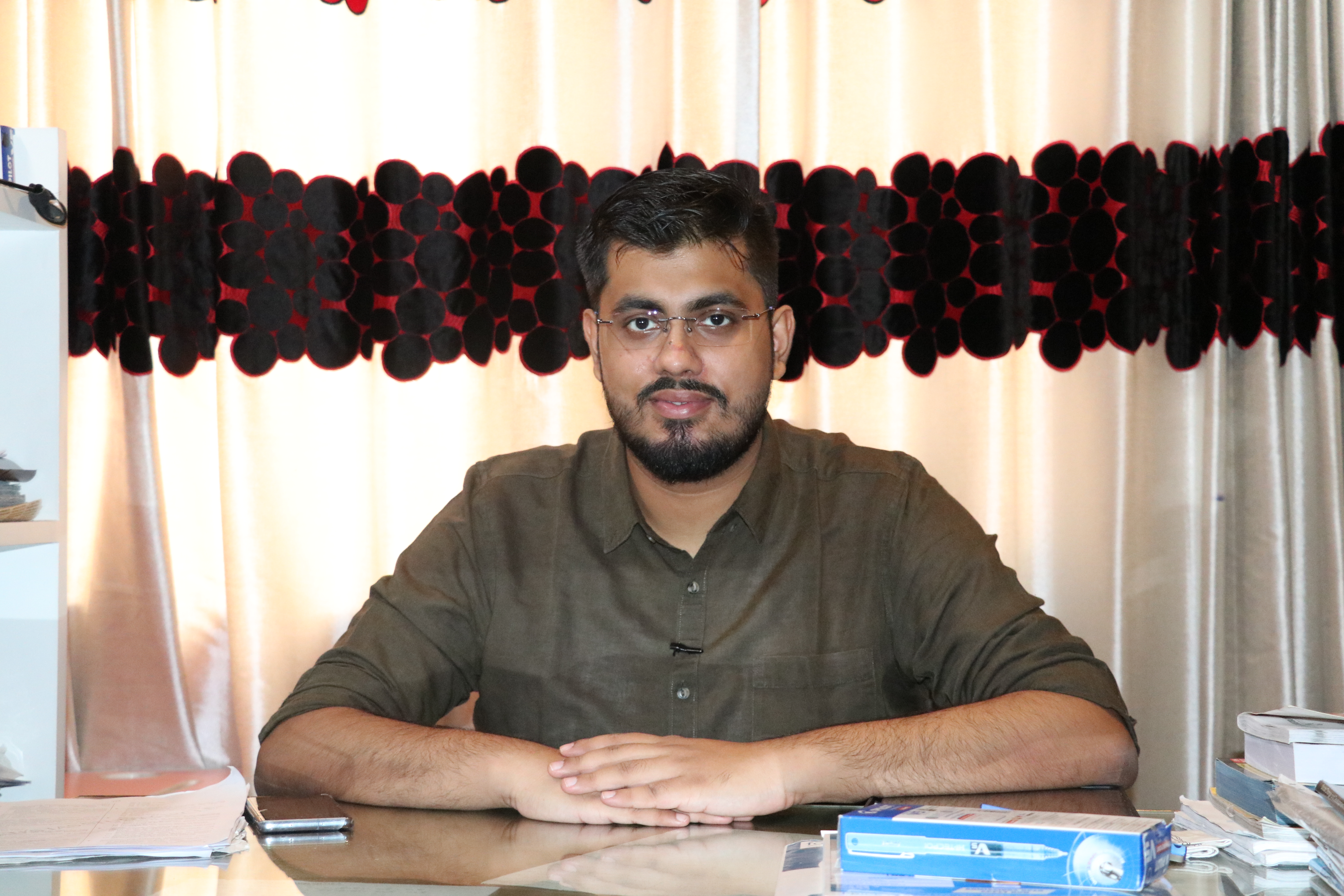
I am Shubhankar Pratyush Pathak. I originally belong from East Champaran (Motihari) district of Bihar. Although I have lived the majority of my life in Kolkata and Delhi due to my father’s postings. I have secured AIR 11 in UPSC CSE 2021. This was my 1st attempt and my optional is Mathematics. It is my honour to share my Maths strategy on Mudit Jain sir’s blog, as this is one platform that I have used extensively to understand the exam before I started preparing for it.
Brief Background:
I completed 10th and 12th from Sanskriti School in New Delhi. I qualified JEE exams in 2016 and graduated as an Electrical Engineer from IIT(ISM) Dhanbad in 2020. I had completed my internship at Cisco Systems in my 3rd year and was awarded a Pre-Placement Offer (PPO).
I joined Cisco Systems as a Software Developer in August 2020 and resigned from my job in February 2021 to prepare solely for UPSC CSE exam.
Who Should Choose Maths as their Optional?
B Sc./M Sc. in Maths
BE/B.Tech. graduates (60-65% UPSC syllabus covered during graduation)
If you are in a dilemma to choose Maths or not, try Ordinary Differential Equations/Linear Algebra topic from Paper 1 and Numerical Analysis/Linear Programming from Paper 2. If you struggle in either of these topics, Maths would not be the right optional for you as other topics are much more difficult. However, if you enjoy these topics and do 70-80% questions correctly in your first go, you should give a serious thought to Maths as your chosen one!
Who Should NOT Choose Maths?
Candidates who have had no background in Maths after school. Even if you studied Maths in your 12th, but not beyond that, Maths would not be the right optional for you because the level of Maths and the topics involved are more complex than school level Maths.
Advantages of Maths Optional
Objective in nature – can predict your score after your exam
High scoring (continuously 300+ scores; even in 2020 and 2021 when optional scores have gone down, 280+ has been achievable by many)
Breaks monotony of GS subjects. Can solve Maths whenever you get bored with GS, gives a unique perspective and boosts your confidence
Good Material is easily available (will share later in the blog)
Completely static subject – the more you revise, the better you get at it
Disadvantages of Maths Optional
Very lengthy syllabus (amongst the lengthiest optional available)
Binary scoring, which means you will be heavily penalized for wrong answers even though overall method is correct
Scaling factor, to bring parity with other optional subjects. This reduces probability of scoring average marks in optional (240-260) which is common in other optional subjects. Score in Maths is either <235 or >265 in majority of cases
No overlap with GS subjects, have to study them separately (for ex – with PSIR optional, GS2 syllabus is pretty much covered completely)
Physics topics such as Mechanics, Fluid Dynamics are a pain in themselves
Why I Chose Maths?
I had only 1 year for preparation of GS and Optional. GS was completely new for me, so did not want a completely new Optional subject as it would be double burden on me. So, I was left with 2 choices – Maths and Electrical Engineering (EE).
I decided against EE for the simple reason that covering 3 years of engineering in 8 months would be a herculean task. Also, I was not in touch with EE for 6-7 months and hence it would take longer time to finish.
Maths in engineering is compulsory in first 2 years, which is about 60-65% of UPSC syllabus. Even in EE, maths is a constant companion with differential equations, Laplace Transformations etc. So, I was always in touch with Maths. I also had a good aptitude with the subject and quite enjoyed it. Hence, for me choosing Maths as my optional was a no-brainer and it was a rather quick decision.
Coaching for Maths?
As I said in my GS blog – NEITHER NECESSARY NOR SUFFICIENT. I enrolled in IMS online classes in July 2021 but left within 4 months by December 2021, as I realized that covering the syllabus only from their classes would take a lot of time. I decided to complete the remaining syllabus on my own, using IMS notes as my base.
Currently there are many coaching institutes which have started providing Maths coaching. You can enquire about them before you make a decision. However, you must realize that Maths requires a lot of self-study and practice. Just coaching would not suffice.
Do’s for Maths:
Maths CANNOT be read like GS subjects. You need to pick up the pen and SOLVE
Practice, practice and practice
PYQs are a MUST. Solve both UPSC CSE and IFoS papers
Stick to limited sources
Multiple revisions
Dont’s for Maths:
Solving books cover to cover
Spending time in low reward topics such as Navier Stokes in Fluid Dynamics (asked only once in 2014)
Relying only on coaching
Ignoring GS subjects in the hope of acing Maths
My Strategy:
First things first, I have scored 286 overall in Maths (143 each in both Paper 1 and Paper 2). I overall attempted 450 marks, out of which 370-380 were correct attempt which was then scaled down to 286 (personally felt that scaling in Paper2 was higher compared to other years).
Since I had very less time, my preparation base relied mostly around IMS notes. Before starting my preparation for Maths, I read Kanishak Kataria sir’s (AIR 1 2018, 361 in Maths) blog. I found it to be extremely helpful and I devised my strategy around his plan as he had mentioned. I tried to follow him as much as I could.
I finished 1st iteration of my syllabus in 8 months. After that, I stopped Maths to prepare solely for Prelims. However, the exam got postponed in March due to 2nd Covid wave. Due to this, I consolidated my weaker areas in Maths such as Real Analysis, Physics Portions from Mathocrat Channel on Youtube. If you are preparing with Maths as your optional, Mathocrat by Shivraj Gurjar sir (IIT KGP, 300+ in Maths) is God’s Gift from Heaven! I would STRONGY SUGGEST you to go through his channel before considering expensive coaching in Maths.
After Prelims on October 10 2021, I studied only Maths until the results were announced on 29 October 2021. By this time, I revised entire Paper1 and 2 topics of Paper2. After that I finished my overall Maths revision by November 25. I did not solve any test series, even though I was part of IMS test series as I was running short of time. I still had to cover a lot from GS as well.
So, I decided PYQs are BEST TEST SERIES. I found chapter wise compilation of PYQs on G20 group on Telegram and printed them. It is a wonderful compilation with topic wise PYQ segregation of each chapter. I solved them twice and marked important questions/concepts which I revised before Mains.
I also made 10-20 pages notes of important formulaand concepts of every chapter to revise before Mains, as IMS notes are very bulky and cannot be revised swiftly just before the exam. I have shared these notes on Mathocrat Telegram Channel. I would strongly encourage candidates to make their own notes because I might have not mentioned some topics that they might want to revise just before the exam, as they came naturally to me.
As in GS, PYQs were the base for my Maths preparation. I understood the difficulty level of questions, how much depth is required in each chapter, which topics I can give less time to and what topics UPSC is more interested in recently (for ex – differentiation under integral sign or Leibnitz Theorem has come up from Calculus in 2020 and 2021, proofs of formulae in Numerical Analysis etc). In any case, if you solve last 10 years questions asked by UPSC, 80-85% of syllabus would be revised and you would also find exact questions being repeated.
Finally, do not be OVERDEPENDENT on maths for your selection. Give equivalent time to GS subjects and maintain a balance in your preparation, which will ultimately reflect in your UPSC marksheet.
Booklist/Sources (Paper1):
Linear Algebra
Easy topic and very scoring
Did not find Schaum Series and Krishna Series much useful
Stuck to IMS notes and solved PYQs extensively
Pattern of questions tends to repeat quite often
Calculus
Stuck to IMS notes and PYQs for practice
Much of the syllabus overlaps with Real Analysis (Paper2)
UPSC is identifying new sources every year (for ex – compulsory question in 2021 from Arihant JEE book). Hence more focus should be on conceptual clarity
Fairly straightforward, easy and scoring
I solved only IMS Notes and Mathocrat questions covered in Real Analysis playlist
Analytic Geometry/3D
IMS notes are basically short notes of PN Chatterjee book
I solved questions from PN Chatterjee, and complemented it with IMS notes
Pre Conicoids, it is a very easy and scoring subject
Post Conicoids, it is not as tough as it looks. This part is very algorithmic, same steps and procedures to be used to for all conics just that their equations change. Extensive practice is required
ODE
Amongst the easiest topics in syllabus
Used subsequently in other topics, hence should be covered earlier
Formula based, so high scope of calculation error and hence requires good amount of practice
Easy and scoring
I followed IMS notes as my base and MD Raisinghania book only for selected topics (did not cover end to end)
Solving integrations quickly is important. Revise basics of indefinite and definite integration from school/JEE notes if finding it difficult
Statics and Dynamics
“Faaltu me badnaam” topics hai
I found them fairly easy, especially SHM, Projectile Motion, Catenary, Virtual Work etc.
Very algorithmic and rather straightforward if PYQs are solved well
Followed ONLY Mathocrat channel for conceptual clarity (My younger brother helped me as well)
Practice Krishna Series solved questions. Many times, they are copied verbatim by UPSC
Vector Analysis
Amongst the easiest and fun to do topics
Scope for silly mistakes is high, so requires extensive practice
Did not find Schaum Series useful. Stuck to IMS Notes only and found them comprehensive enough
Emphasis should be on remembering various formulae and marking tricky questions for quick revision before exam
Paper1 has higher scaling because of easier nature of topics.
During my Mains, a compulsory question was wrongly printed by UPSC from Vector Analysis. Actual answer was 0 but we were required to prove something else. I wasted around 15-20 minutes on a single 10 marker and panicked mid-way into the exam. This led to disasters in other questions where I made the worst of errors that every Maths candidate fears. I made +/- error in integration while substitution, solved a determinant wrong and could not solve the easiest of questions in Linear Algebra. Because of 20 minutes of panic, I solved 35 marks of very easy questions wrong which ultimately reflected in my overall score of 143, which could have been around 160. I’m sharing this so that candidates do not repeat my mistakes, although easier said than done!
Booklist/Sources (Paper2):
Modern Algebra
Probably the toughest topic of the syllabus
I followed only IMS notes and no other source. Revised them 3 times. I found them sufficient. This topic took me more than a month alone in my 1st iteration!
Could not understand most PYQs. I realized that even if people prepare this topic really well, they may not be able to solve tough questions. So, I focused only on the basics and understandable portions
Focus on Lagrange Theorem, basic proofs that may appear as simple questions, proving groups/rings, 3 theorems of isomorphism and their associated questions which look tough but are actually easy, Homomorphism, important examples like Quarternion Groups or SL/GL groups etc.
Do not fight your ego if you struggle here. Cover only as much as you think is enough for the exam
Real Analysis
One of the topics I feared, until I found Shivraj Sir and Mathocrat on YouTube
Please go through Real Analysis Playlist from Mathocrat. All your concepts will get crystal clear and you would only need to solve PYQs thereon
Practice is the key here as initially almost all topics seem similar in concept. You will understand the nitty-gritties only with multiple revisions
Also solved questions in IMS notes post understanding from Mathocrat lectures
Don’t focus much on proofs. UPSC has enough chapters in Paper2 to ask proofs from, and rarely have they ventured into proof-based questions in Real
Complex Analysis
Amongst the easier topics in Paper2
UPSC has a habit of asking proof-based questions from here
Found IMS notes a little lacking in this topic, so complemented it with Krishna Series (JN Sharma)
This chapter requires a good balance of conceptual clarity and formulae-based questions
Learn special contours asked in PYQ like triangular based (sin of x^2 etc.)
Over all in easy to medium category
PDE
Can be a little tricky, but at the same time, can be mastered through rigorous practice
Formulae based, hence massive scope for silly errors
Primary source remained IMS notes, complemented with MD Raisinghania for selected topics in which I felt I needed more practice and those which are asked more frequently by UPSC
Application of PDE topic may look daunting at first, but later turns out be very easy and algorithmic. In fact, I attempted a 20 Marker proof in Mains from this topic with total perfection! This boosted my confidence in the paper as well
Other topics such as Cauchy Characteristics (turning out to be a UPSC favourite in recent years) and Reduction to Canonical Forms are also laborious. Please practice them well
Neither easy, nor very difficult topic in my opinion
LPP
Easiest topic in Paper2
However, this topic is the king of silly mistakes. I personally made a lot mistakes in Simplex Method, although very simple
Later parts of syllabus such as transportation problem, assignment problem etc. are very easy and must be covered well
Main source was IMS notes and complemented with Krishna Series
Very algorithmic in nature, need to remember important tables and methods to the T
Numerical Analysis
LEARN HOW TO USE THE CALCULATOR
Formula based topic, hence prone to mistakes. Certain topics take longer iterations such as Bisection Method, Gauss Seidel etc. and hence can be frustrating, which may lead to errors
IMS Notes only and help from my younger brother
UPSC is now asking proofs of important formulae and error analysis. Better to go through them once (Newton Backward Interpolation proof was asked in 2021)
Over-all an easy topic, but requires lots of practice
Computer Programming
Learn algorithms through Kanishak Sir’s notes (very comprehensive). Learn to formulate algorithms on our own
Conversions among different numeral systems are the easiest questions and can be cross checked in calculator
Refer to PYQ and understand concepts which have been asked (for ex – SOP, POS etc. Karnaugh Map has never been asked so no need to study)
Easy topic on the whole if practiced well. Students generally tend to neglect this topic and regret in the actual paper
Fluid Dynamics
Mathocrat should be your SINGLE STOP DESTINATION. Not one question in 2020 and 2021 has been asked beyond what Shivraj Sir has taught in his lectures
Many questions such as streamlines, pathlines, complex potential etc. are basically ODE, PDE and Complex Analysis questions disguised in the form of Fluid Dynamics!
Tougher questions on pressure related concepts have not been asked in recent years, but still need to be covered well. Especially different types of flows. Again, Shivraj sir lectures are more than enough
Not as tough as it sounds
Only source for me was notes made from Shivraj Sir classes and selected topics from MD Raisinghania
Mechanics
Mathocrat again is King
Only referred to Shivraj sir classes and made notes from them
Certain topics such as Moment of Inertia, D’Alembert, Lagrange and Hamiltonian have become UPSC favourites and after Mathocrat lectures, you would want UPSC to ask questions from here!
Medium topic. Certain concepts are difficult, but others are there for us to grab marks and create a better impression on examiner if we solve questions from this topic
I guess we can understand why Paper2 is considered tough. Not only does it have tougher topics, but the easier ones are also such that they have a lot of scope for mistakes because of their nature and kind of questions asked. Multiple revisions and practice is the ONLY WAY OUT.
I personally felt that scaling was little heavier in Paper-2 this time compared to other years. This is the reason why scores in Maths have dropped from 320+ to 300+ in recent years as benchmark. I scored 143, which to be honest, I still cannot comprehend why. I was expecting 155+. But in any case, I am satisfied with my final result! The disappointment mainly stems from the fact that I solved PDE Application proof, Lagrange Theorem Question etc. from difficult topics really well. May be a few calculation errors in Numerical Analysis/Complex Analysis? Who knows? So don’t need to bother much on scaling part. In other optionals, getting 140+ in both papers is also not that common!
Finally, I would like to say that yes Maths optional is difficult, long, time-taking, doesn’t help with GS etc etc. But, with certain minimum efforts, it guarantees the comfort of at least 270+ in optional paper in ANY year, irrespective of marking or scaling. Also, if you have a time crunch, as I did, Maths optional ensures that you give only as much time as is required in GS subjects. A sort of self-correction and regulation which is of utmost importance in this exam.
Hopefully my few words would have clarified your doubts and would help you in your CSE journey!
All the best,
Shubhankar Pathak (AIR 11, CSE 2021)
You can contact Shubhankar Pratyush Pathak on his LinkedInProfile.


Leave a Reply