Hi All,
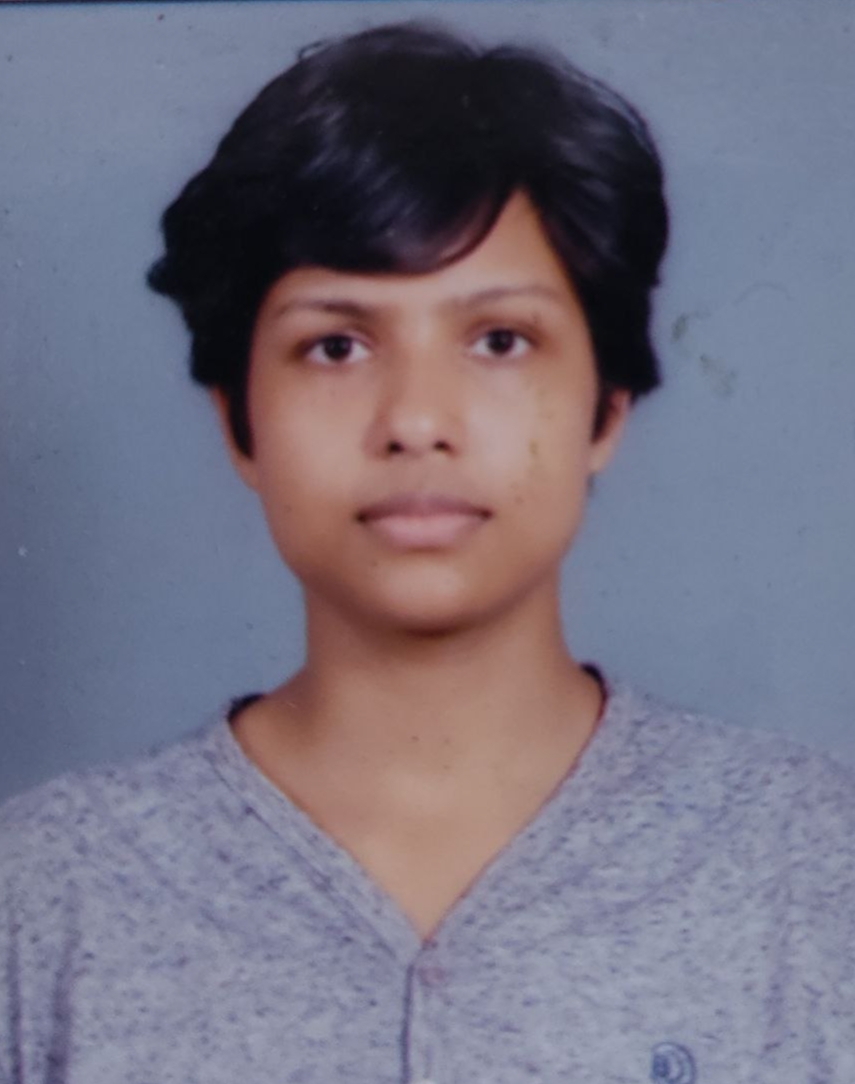
Anjali Verma, a member of DecodeCIVILS Telegram Group, secured AIR-577 in CSE-21 in her very 1st attempt. Following is her strategy in her own words:
Hello everyone, I am Anjali Verma and I have secured AIR 577 in CSE 2021 in my first attempt. I would like to thank Mudit Jain Sir for giving me the opportunity to share my strategy with the aspirants.

Firstly, I’d like to talk about my approach for prelims, followed by my experience in mains. Then, I’d share a few things that I learnt in the course of preparation, which I hope can be of some help in your journey.
Approach for Prelims
LIMITED RESOURCES, MULTIPLE REVISIONS–that, I believe, is the key to success in prelims.
Choose one or two sources for studying a subject and avoid the latest fads in the market. The confidence you are likely to gain after having a good command of the basic reference material is invaluable. Moreover, multiple revisions from the same source would allow you to develop a deeper understanding of the subject which would help you eliminate incorrect options in prelims.
You can connect with Anjali at her LinkedIn Profile.
Now, solving questions in prelims would require two things: precise knowledge, and intelligent guesses.
Precise knowledge: Having an in-depth knowledge of one or two books on any subject should be the aim. You should cover your basic reference book with enough detail that you can answer around 50-60% of questions asked in your first few attempts at mock tests on these topics/subjects.
After solving a few mocks, you’d start to get an idea about the important areas from where questions are always framed. For example, topics like federalism, president, parliament, etc. in polity. If you find yourself scoring less than 70% in these frequently asked topics, revise these even further. It’s because you should not miss out on the low-hanging fruits.
Intelligent guesses: Most questions asked in prelims require you to take a guess. With the difficulty level in prelims these days, knowledge might get you 35-40 questions right; for anything more you’d be eliminating and choosing the best possible option. I followed Anshuman Rajhans Sir on Youtube for learning to spot possible incorrect options in prelims.
Decode GS-2: Governance & Social Justice Sample & Format Explainer:
PRELIMS FAQs
Q: I am not able to score in mocks. Does that mean I won’t do well in prelims?
A: Mocks are useful to test your knowledge but the questions asked are nowhere close to the artfully crafted questions framed by UPSC. So, if you’re scoring below 80-90 marks in mocks consistently, you should consider thorough revision of those topics where you could score more with some effort.
Q: How many mocks should I solve to improve my chances at prelims?
A: Most successful candidates finish at least one test series which consists of 35-50 tests. I did around 70 mocks and previous year questions (PYQs) and I was able to score 10 marks over the cut-off.
Q: What is an acceptable score in mocks?
A: That depends on multiple factors. For a full length, 90+ is a good score. For subjects like polity, geography you could aim for 115+ after a few revisions. For topics like science and tech, ancient and medieval history—you could survive by scoring 70+ because the questions asked in the actual exam are a bit difficult and sometimes random too.
Join Decode Civils Telegram Group For Free UPSC CSE Guidance From Mudit Jain, IRS CSE 2017 (Ex-IPS CSE 2014 & 2015), Author of Decode Ethics and Decode History Books
Q: What are some good reference sources for prelims?
A: I used Spectrum for modern India, Tamil Nadu board for ancient and medieval India, Laxmikanth for Polity, Shankar for Environment, NCERTs for geography, ONLYIAS notes for science and tech, and Mrunal sir’s notes for Economy. Other than these, prelims material provided by ONLYIAS is really good (Udaan series). And I also used VISION IAS modules called PT365 for current affairs.
Approach for mains
LIMITED RESOURCES, MULTIPLE REVISIONS- this is the key to success in mains as well!
I used the same books for mains that I used for prelims. I made extremely short notes for mains and kept revising those. I used those for revision right before the actual exams too. Now, let’s talk about the most important things.
The first few lines I always say about mains are there:
- Make sure you do your optional very well. If possible, prepare model answers of the previous year questions and learn those. This is the most predictable part of mains, and could be the most scoring as well (in terms of percentage of marks scored).
- Please practice writing of 6-10 essays beforehand and join a mock test series, or at least get it reviewed by competent people you know.
- Make a fact sheet type compilation for each GS paper. I prepared 5–15 page notes filled with data, numbers, case studies, important definitions, and examples for each GS paper. Revising it multiple times will enable you to quickly recall important facts and figures to quote in the exam.
I find mains easier than the prelims stage. It is because the luck factor is lessened to a great extent. I do not intend to say that mains stage requires less effort or dedication, but that the efforts done here are greatly rewarded.
MAINS FAQs
Q: Is there a way to maximise my chances for success in mains?
A: Understand the demand of the question and hit the bull’s eye in the answer. Don’t aim for a perfect answer, write a decent answer for most questions. And try not to leave any answer blank. Write something. I was told by someone who was already in the services that if only I write all the answers, I’d get selected for the interview. Well, that paid off well for me.
Q: What do I do for essay and ethics?
A: For essays, your best bet might be a test series. But take their feedback with a pinch of salt. Most people who correct copies have only a vague idea about essay writing and sometimes their feedback might not be very useful.
For ethics, I used DECODE ETHICS by MUDIT JAIN sir. I find this one better than Lexicon. This book comes with many more keywords, examples, model answers, and diagrams that you can use in the exam. It is the only source I used for ethics.
Q: When should I start studying my optional subject?
A: It would be ideal if you’re done with the optional at least once before prelims itself. Don’t leave optional for after prelims.
Q: When should I start studying for mains?
A: I find the best way is to do prelims and mains preparation simultaneously. It means while you’re doing prelims-type questions, make sure you write answers and get those evaluated too.
Q: How important are mocks?
A: If you’re attempting the exam for the first time, then mocks are a good idea. Otherwise, you could use topper’s copies for answer writing practice. Open any of those, write answers to the questions they wrote, and see how you fare compared to their copies.
Q: What are additional sources one needs for mains preparation?
A: For world history, I used VISION IAS notes. For society, I did Saurabh sir’s notes (available on telegram); for governance, I only did questions from mock test series. And for current affairs, I used VISION IAS’ mains 365 series. Further, you could read Anudeep Durishetty sir’s book for detailed information on essay and answer writing.
MY PHILOSOPHY FOR PREPARATION
Consistency. This is the most important thing for your preparation. By consistency, I mean, studying at least 5-6 days a week (I did 7/7 most weeks) for 1-2 years of your prep.
Multiple revisions. I know I am repeating myself, but this is very important for success in any exam. Revise the frequently asked topics maybe 8-10 times if you are not comfortable with those.
Taking mocks. You should do these regularly as it’ll keep you informed about your preparation. It’ll also keep you grounded. Moreover, the point of taking mocks is not to score high, but to analyze the areas for improvement.
Positive attitude. A positive attitude towards the exam is important. If you’re facing difficulty in some topic, remember that a vast majority are also going through the same. So instead of giving up, take these as stepping stones for success. Maybe a good number of aspirants would give up, and if you stick to the process, you might succeed.
Strategy. Different things work for different people. I like to finish one subject before moving to a new one, some people study 2-3 subjects at a time. So, use approaches that you know, by experience, work for you. I used to make a monthly plan that was quite basic. I would write down the rough time frame I’d need to finish a subject and what subjects could I aim to do in any given month.
Things did not go according to the plan sometimes. But at least I had a plan that streamlined my preparation. And even if you missed one or two deadlines, or could not do any subject very well, you should remember that you’ll have multiple cycles of revisions and you’d be comfortable with most of the topics by the end.
STRATEGY FAQs
Q: How many hours should I study each day?
A: If you’re starting out, on most days invest at least 4-5 hours in self-study. If someone has cracked prelims once or twice before, they could do with 2 hours a day.
Q: Should I join a coaching institute?
A: Joining good coaching gives you an edge in your preparation. Navigating through tough topics, identification of important ones, and suggestions on writing better answers are the benefits one gets from an institute. I did not join any because I was comfortable with most subjects asked in the UPSC CSE. If coaching is not an option for you, you could use telegram or YouTube to find resources that could be helpful.
Q: What should I choose as my optional subject?
A: It totally depends on your study background and your interest in the subject. For me, law was a natural choice because I was still in my fifth year of law school. That saved me from starting another subject from the scratch.
Q: I am not confident about my preparation, what should I do?
A: Maybe feeling confident is not the most important thing for your preparation. It’d be good if you’re confident and if not, ensure you’re comfortable with most topics and subjects. Try to score well in mocks, and you might start to develop the confidence you need.
Q: Do I have to sacrifice my personal life for this exam?
A: If you’re quite outgoing and social, that might require a bit of compromise on your part. As long as you have a plan on how you intend to finish the syllabus with a decent level of competency and you deliver on it, feel free to have some fun now and then. But prioritise studies in any case.
So, this was my take on how you could structure your CSE preparation. There is no perfect strategy or formula but the one that you find workable.
Remember, ups and downs are the part and parcel of this process and you should be ready to cope with those. Face challenges with grit because if you don’t do it, someone else will. It’s a competition and you need a comparative advantage over others in order to secure a place in the list.
You can connect with Anjali at her LinkedIn Profile.
Other CSE 21 Topper Strategies:
- Surbhi Goyal (AIR-78, CSE-21) Essay Strategy
- Shubhankar Pratyush Pathak (AIR-11, CSE-21) Comprehensive Strategy
- Arpit Gupta (AIR-54, CSE-21) Prelims, Mains & Maths Strategy
- Anjali Shrotriya (AIR-44, CSE-21) Prelims & Mains Strategy
- Shubham Satyam (AIR-497, CSE-21) Detailed Prelims Strategy
- Roja S Rajan (AIR-108, CSE-21) Comprehensive Strategy
- Shubham Bhaisare (AIR-97, CSE-21) Civil Engg. Strategy
- Sparsh Verma (AIR-644, CSE-21) Prelims Strategy
- Nivedita R (AIR-572, CSE-21) Strategy
- Anna Sinha (AIR-112, CSE-21) Strategy
- Pankaj Gujar (AIR-423, CSE 21) Working Professional Strategy
- Hiren Barot (AIR-332, CSE-21) GS & Sociology Strategy
- Antriksh Jain (AIR-130, CSE-21) Sociology Strategy
- Keshav Gupta, AIR- 439 CSE-21 Economics Strategy
- Dilip K Kainikkara (AIR-21, CSE-21) Maths Strategy
Leave a Reply