Hi All,

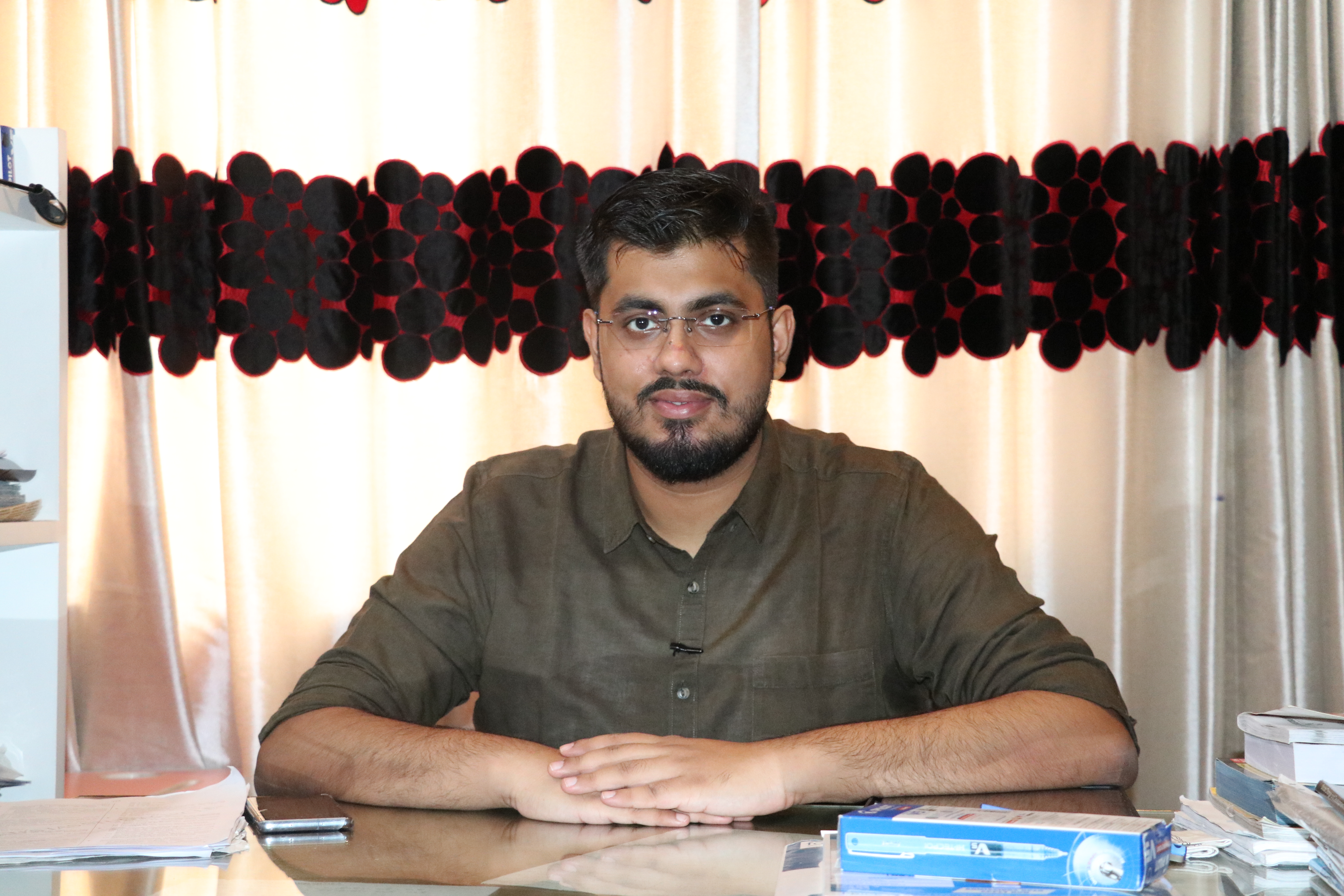
Its my pleasure to share UPSC CSE strategy of Shubhankar Pratyush Pathak who secured AIR-11 in CSE-21 and that too in his very 1st attempt!! Basically, he came, he saw and he conquered. No fuss!!

You can contact Shubhankar Pratyush Pathak on his LinkedIn Profile.

Following is Shubhankar Pratyush Pathak’s strategy in his own words:

I am Shubhankar Pratyush Pathak. I originally belong from East Champaran (Motihari) district of Bihar. Although I have lived the majority of my life in Kolkata and Delhi due to my father’s postings. I have secured AIR 11 in UPSC CSE 2021. This was my 1st attempt and my optional is Mathematics.

It is my honour to share my overall strategy on Mudit Jain sir’s blog, as this is one platform that I have used extensively to understand the exam before I started preparing for it.

Brief Background:

I completed 10th and 12th from Sanskriti School in New Delhi. During my first attempt for IIT-JEE, I could not qualify the exam. This was a huge blow for me. I decided to take a drop year and prepare again. In my second attempt, I qualified JEE exams in 2016 and graduated as an Electrical Engineer from IIT(ISM) Dhanbad in 2020. I had completed my internship at Cisco Systems in my 3rd year and was awarded a Pre-Placement Offer (PPO).

I joined Cisco Systems as a Software Developer in August 2020 and resigned from my job in February 2021 to prepare solely for UPSC CSE exam.

Why Civil Services?

My father is a civil servant from 1995 batch. Having observed his career very closely, I knew about the positive and negative aspects of the services, the highs and the lows. Also, since I always lived in government quarters, I was always surrounded by civil servants.

Civil Services as a career appealed to me from the very beginning. I was aware about all the things it had to offer during one’s career. But the process to become one was always daunting for me. I was not confident in social sciences subjects in school, where the focus was primarily on rote learning. I naturally did not perform well in these subjects. After 10th, I opted for Science due to my natural inclination for Mathematics and went on to appear for IIT exams, keeping my CSE aspirations on hold.

Preparation:

During my time in college, some of my seniors performed exceptionally well in CSE exam. Examples being Rishi Raj Sir (AIR 27), Jai Shivani Sir (AIR 81). It was a major confidence booster for me. At the same time, I finished my internship at Cisco Systems and was very disheartened by seeing lack of leadership opportunities for very senior employees (although the overall work culture was very positive because of which I accepted the PPO).

I then decided in my final year that I will prepare for CSE whole heartedly. I read many blogs of toppers, including on Mudit sir’s blog, saw many topper videos and decided on a book list. I tried reading a few NCERTs, but could not understand much from them. Dejected again, I initially planned to work for 1 year before attempting the exam.

As fate would have it, Covid lockdown was announced in March 2020, when I was still in my final semester. My joining at Cisco was delayed by a month from July to August and work from home (WFH) was announced. I decided that this would be the best time to start my prep.

I started my serious preparation for CSE in June 2020, with prelims supposed to happen on 26 June 2021. I joined a coaching, Rau’s IAS in their first online batch.

Is Coaching Necessary?

As I said, while reading NCERTs, I couldn’t grasp most concepts and felt lost. So, I was sure I required help with GS related syllabus. Coming from a financially secure background and a good job at hand, along with WFH, since I had very limited spendings, I joined a coaching.

I would like to clarify – COACHING IS NEITHER NECESSARY NOR SUFFICIENT to clear the CSE exam. Many people have aced the exam without coaching and many fail to clear with all guidance and support from various coaching’s. Even if you do opt for one, SELF STUDY is an absolute must. Just joining a coaching is NOT enough.

I joined coaching to understand the topics faster. I could have searched on YouTube, read multiple sources and understood all topics without coaching. But I joined coaching for precisely this – SAVING PRECIOUS TIME (since I already had less than a year).

Daily Timetable:

This is one of the most frequently asked questions. So here goes:

Initially when I was working, 8-10 hours would go in work. I then watched the recorded videos of classes uploaded by my coaching. I watched them at 2x speed to save time. There used to be 2 classes of 2 hours each, every weekday. To cover these daily, it used to take me around 3 hours (since I also had to make notes). I had very less time left by the end of the day, hence couldn’t study much. I used to wake up at 5AM, study optional till 7AM. Then read newspaper for one hour and start with office work. In the evening, by the time I finished my classes, I used to study 30-45 minutes max post dinner and slept at around 11PM.

I left my job in February 2021. After this, I used to study 8-10 hours every day. I divided my day in 2 halves – first half for optional and second for GS.

Obviously, as exam approached, studying time increased automatically without much effort.

NOTE MAKING:

DON’T MAKE NOTES IN THE 1ST READING. Make notes only after you have read a book 3-4 times. When you do so, in subsequent readings you would realise what you remembered and what you forgot. It is the important topics that you forget more which needs to be underlined and highlighted. In subsequent revisions, read these parts ONLY and not those which you already remember. This would make your revision much more efficient and faster.

For example – In President chapter of Laxmikant, I remembered the electoral college. So, I didn’t mark it in the book. Whenever I revised this chapter, I would just see the topic and revised in my head as to who all could vote for President. But under Article 143, I was always confused as to when Supreme Court’s advice to President is binding and when it is not. So, I would always revise this each and every time. Similarly, I always revised who all were included in Schedule 2 and Schedule 3.


Various successful candidates of UPSC CSE-24 were part of Ethics/Essay Modules & Other Initiatives. Some of them, with their clickable feedback, are AIR-2, 28, 3235, 53, 5455, 57, 61, 72, 91119217, 219, 247, 256, 261, 287, 299, 328, 351, 450, 525, 579, 590, 728, 813, 871, 905 etc.

My 2026 Modules: Current Affairs 2026 Prelims + Mains, Ethics ClassesEthics Test SeriesEthics Classes + Ethics Test SeriesEssay Classes + Test SeriesEthics + Essay Bundle

Ethics Module 2025-26 Detailed Plan: 281 Pages, 776 Examples, 78 PYQs, 27 Applied Ethics Issues, 18 Answer Templates. Click Here to Download the Detailed Planner

My Books: Current Affairs Prelims 2025Decode Ethics 2025 MainsDecode Essay 2025 Mains & Decode CSAT

My Free Initiatives: Free GuidanceFree Current Affairs PDFYouTube

PRELIMS:

Probably the toughest part of the exam, and the only phase where UPSC eliminates candidates. Simple Mantra for Prelims that worked for me – STUDY LESS, REVISE AS MANY TIMES AS YOU CAN.

Pre is not a paper with 100 questions. It is a paper with 250-300 statements. The more black and white statements you know, the better it will be for you to eliminate statements and solve questions. I had a very limited book source for Prelims:

Polity M. Laxmikant (make small notes/markers in the empty regions of the book itself for faster revision)
Modern History Spectrum by Rajiv Ahir (very important, especially factual details at end and unconventional topics such as pre-British era, various reforms by British government etc.)   Also read 6,7,8,12 NCERTs (new) as recently questions have been cut, copy and pasted from these books. Especially portions and terms mentioned in boxes, maps etc.
Environment Rau’s IAS Compass (I think it is the best source for environment) + PYQ detailed analysis
Economy Only class notes
Ancient India RS Sharma Old NCERT
Medieval History Emphasis on administrative changes by important rulers and not wars won/lost by them Ex- who introduced Chahalgani system and who removed it, who made Iqtadari system hereditary etc.
Art and Culture Selected topics from Nitin Singhania
Geography 11th and 12th NCERT PMFIAS and Rajtanil Ma’am videos for selected topics
S&T Current Affairs based
Biology and Biotech 12th NCERT selected chapters
Current Affairs The Indian Express + Focus Magazine (Monthly edition of Rau’s)

My class notes complemented the above booklist.

I also analysed PYQs thoroughly from 2011. I studied each and every option in detail of each and every question. UPSC has this habit of forming questions from options that were not answers in earlier papers, mostly in Environment (species, wildlife sanctuaries, tiger reserves etc.) and Art & Culture. For example – Under2 Coalition was asked as a part of a match the following question in 2020 and again repeated in 2022.

I used to revise these papers in the last 15 days before the Pre so as to get accustomed to language of UPSC. For example – UPSC has this habit of writing “In the Constitution of India, ……”. The second part of the statement is invariably right but it never is in the Constitution. So, I used to be very alert and cautious when this term appeared in the actual question (happened in 2021 Pre, in RBI Governor question).

In Prelims, no body knows more than 30-35 sure questions. I myself could only solve 23 questions in the 1st iteration in actual exam. I ended up attempting 85 questions, through eliminations. Eliminations in Pre are NOT BLIND GUESSES, rather a method to madness. It is here that I took help of Varun Jain Sir’s course on elimination methods which helped me a lot. I was also part of QIP at Rau’s and many questions came directly from what was taught in those classes.

Also, don’t go in with a fixed target that I have to attempt 90 or certain number of questions. Assess the paper and decide accordingly. Trust your preparation, and the fact that if you’re finding it difficult so would everyone else.

UPSC is adding a surprise element every year to trouble the candidates and check their mettle. It was agriculture in 2020, sports in 2021, IR and difficult history questions in 2022. Do not get unsettled by such questions. Realise the fact that more than 60 questions appear from Polity, Economy, Environment and Modern History alone. And their questions are easily doable. So, stick to basic sources here and strengthen your static portion to solve at least 40 questions correctly from these areas.

As far as test series is concerned, I solved all tests of Rau’s IAS and Vision (from a website for free). I also solved full length tests of other coaching’s as and when I found them on Telegram/websites which uploaded them for free. My main motive was to check whether I am solving static questions correctly or not and not very worried with factual questions. A week before Pre, I had scored 70 something in a mock test but was very happy because I solved all Polity and Economy questions correctly! I personally never revised mock tests, but a lot of other candidates do. Find out your own way!


MAY 2025 ONWARDS CURRENT AFFAIRS NOTES

CSAT:


The level of paper is increasing every year. I personally didn’t struggle with it because of my background. However, if you feel some issue, please prepare for it. There is no shame in preparing for CSAT. People say it is only qualifying in nature, but then so is Pre/GS1 paper. There is nothing worse, or rather criminal, than qualifying GS1 and flunking CSAT.


I used to solve maths, data interpretation, logical reasoning questions twice so as to avoid silly mistakes. I attempted 61 questions overall, with comprehension questions in the time left. I attempted 45 questions of Maths after 2 rounds of solving, had 30 minutes left so attempted 16 comprehension. Devise your own strategy and stick to it.


Mains:


The real exam. 1750 marks that will decide your fate. UPSC has given a very detailed and crisp syllabus, so stick to it.


For many subjects such as Polity, Modern History, Geography, Art and Culture etc., the sources remain the same. So, you can start answer writing practice just after Pre since these portions are already well consolidated.


Also in the meantime, start preparing for optional and other mains specific topics. Identify low hanging fruits.


Book List:


GS1 (scored 98)


Modern History Spectrum, but emphasis on analysis rather than just reading important facts (syllabus mentions only after 1750, so stick to it)
Geography 11th, 12th NCERT. Emphasis on issues, important diagrams, conceptual clarity
Art and Culture Nitin Singhania selected topics. Don’t neglect since asked for 50 marks in 2020.   Also keep tabs on important current affairs (for ex – I prepared Kakatiyan Architecture well due to Ramappa temple being declared as World Heritage Site, Dholavira and Lothal in news etc.)
Society 11th and 12th NCERT + 250-300 words notes on each topic mentioned in syllabus. Also found Varun Jain sir notes (EdSarrthi) very helpful.   Keep tabs on current affairs, ex – marital rape (IPC Section 375), Permanent Commission to women in Army etc.
World History Only class notes, since not very important. Read only important topics such as WW1 and 2, Russian Revolution, Rise of Dictators, Cold War etc.
Post Independent India Basic understanding from Polity, Economy and Modern History. Didn’t read anything specific
World Geography PMFIAS and Rajtanil Ma’am lectures on YouTube


GS2 (scored 114)


Polity Laxmikant again. Has mains related parts such as Sarkaria and Puncchi Commission, NCRWC recommendations.   Made separate page on important judgements, committees and current related matters, ex – Rajendra Shah case on Cooperatives   Remember important articles, ex – A169 for SLC’s asked in 2021 Mains
Governance Made own notes on NGOs, SHGs and all other topics mentioned in syllabus. Important schemes by GoI are also very important.   2nd ARC reports for certain portions, ex – civil service reforms   NITI Aayog India @75 Strategy Document is a MUST READ
IR Mostly current affairs based. Referred to Rau’s Compass Magazine primarily and class notes. Very important to know background of various issues and India’s history with many important countries and organisations.   Directly use terms used by GoI/MEA/External Affairs Minister/PM. For ex – 5S strategy, SAGAR policy etc.


GS3 (scored 94)


Economy Almost 120 marks, out of which 40-60 marks are Agriculture questions. Studied all issues of agriculture in depth and remembered important data, committees and recommendations.   Current Affairs dominates, ex – V shape recovery, infrastructure initiatives   Used Economic Survey and Union Budget liberally in my answers   Basic material remained class notes which helped with static topics this time
Internal Security Class Notes   Low hanging fruit, prepare own notes on every topic as it is a very static topic. Don’t read separate book because hardly asked for 25-30 marks max
Disaster Management Low hanging fruit   Had made a standard framework for all DM questions, incorporated NDMA guidelines and Sendai Framework   No separate book read
Science and Tech Very Random, poor cost to benefit ratio   Prepare basic topics such as biotech, nanotech, AI etc. and pray to God that something pops up from here instead of scientist contributions and technical aspects of defence systems!
Environment Mostly current affairs based   Be prepared with various pollution sources and government steps like NCAP, BioWaste Management Rules, Plastic Waste Management Rules etc.   Read Compass Magazine from Rau’s


GS4 (scored 105)


    • Only GS Paper where you have to read only 1 subject for 250 marks


    • Read EdSarrthi compilation of key terms, their definitions and examples (very crisp of about 25 pages). Added to it on my own and revised it multiple times


    • Also read Rau’s IAS Compass magazine for Ethics.


    • 2nd ARC Report is a MUST READ.


    • Focused more on completing the paper as it is very lengthy. Attempted case studies first and then Part A. Wrote ONLY what is being asked and not what I know (like if examples are asked in theory questions, wrote more examples after explaining theory part briefly)


    • Can use peer discussion for case studies. I used to discuss with my father to get an insight into administrative and legal insights for various cases


    • Wrote very simple answers, not philosophy heavy. But used ethical terms in my answers to keep my answers relevant


Essay (Scored 135)


    • Good essays can only be written after consolidating entire GS syllabus


    • Started writing 1 essay every weekend after Pre and then 2 essays in 3 hours on Saturday’s after pre result


    • Focused on philosophical essays with topics from PYQs. Just because topic is abstract doesn’t mean you have to write some philosophy there. You can let your imagination flow and show your creative side here. Can refer to Vikram Grewal IFS (AIR 51) sir’s blog for greater clarity


    • Wrote “technical” essays such as on women, education, health, agriculture, environment etc. These helped a lot in GS2 answers such as learn while you earn, primary healthcare, women empowerment questions this year


    • Used to write headings in essays. Was discouraged to do so by many but continued with my strategy and listened to my heart. I also used to ask questions and then try to answer them in the essay to make it more engaging for the reader


    • Used to write examples from GS syllabus and tried to maintain flow of essay. Also used to write pros and cons of topic and made the part that I wanted to convey more dominant


    • Evaluation is key. I used to give my essays to seniors, faculty at Rau’s IAS and even my younger brother (no relation with UPSC) to get a general idea of how I am writing and where I could improve


PYQ IMPORTANCE FOR MAINS:


Extremely, extremely important. Analysing PYQs will make you realise that UPSC para-phrases a lot of questions and are not necessarily asking new questions every year. For ex- questions on water stress in agriculture and improving micro-irrigation have almost 70% same answer.


You will also start to understand the important topics, keywords in questions which is very important to write relevant answers.


ANSWER WRITING:


Most important aspect of Mains. All your sea of knowledge is of no use if you cannot put it down in 150/250 words within 3 hours. In-fact it is more important to know how to write answers than just having more content than your competitors.


I started answer writing when prelims got postponed from June to October 2021 in March. I joined EdSarrthi’s Live Answer Writing Sessions (LAWS). This was one of the best decisions I took in my CSE prep. It took away my fear of answer writing, and after pre, I was not a beginner in this aspect. During these sessions, initially I wrote 10 markers in 20 minutes. I never thought I would even finish my paper on my time. I understood that I couldn’t form introductions and conclusions, couldn’t get my thoughts organized etc.


Answer writing in CSE is different from Boards exams and college exams. Here writing more WONT fetch marks but writing RELEVANT will, even if you write less than the word limit. Understanding what is being asked is of utmost importance.


I gave Mains Test Series at Rau’s IAS and worked on the feedback I received from them. I also wrote GS1, GS4 and Essay tests at EdSarrthi.


Prepare model intro and conclusions for topics that repeat often and static topics of syllabus. This will save you a lot of time in the actual exam. For ex- for any water related issue, my intro was NITI Aayog’s CWMI report and conclusion was Gujarat’s “Bhungroo” model. Similarly, I had made intro-conclusions for women contribution in freedom movement, pressure groups etc. because these topics have been asked many times in PYQs.


Make diagrams and flow charts ONLY when relevant, well-practiced and if it comes naturally to you. I didn’t make any diagram/flow charts in GS1 this time and still have a decent score. This only proves that UPSC is looking for relevant answers and not fancy stuff.


It is also essential to write ALL parts that are asked in the question, and not just what you know best. In some questions, UPSC gives a context to the actual question. It is also important to address that part as well.


Finally, read less, revise more. Again. In Mains you have to remember the answer from memory, unlike pre where it is in front of your eyes. It is essential to answer the context of the question from what you already know.


Ex – Q) Discuss limitations of India at COP26.


    1. Didn’t join methane pledge, didn’t join deforestation pledge, phase down of coal instead of phase out


Q) How did India show climate leadership at COP26?


              A) Didn’t join methane pledge since agri-heavy economy, didn’t join deforestation pledge since already doing well on NDCs, phase down of coal since developing economy which is yet to industrialise completely


Don’t leave any question, until and unless completely clueless. Write something relevant and attempt such questions in the end when you will be in a hurry.


ALL THE BEST in your CSE preparations and hope you ace it with flying colours. Hope this blog helps!


Shubhankar Pratyush Pathak (AIR 11, CSE 2021)


You can contact Shubhankar Pratyush Pathak on his LinkedIn Profile.

Various successful candidates of UPSC CSE-24 were part of Ethics/Essay Modules & Other Initiatives. Some of them, with their clickable feedback, are AIR-2, 28, 3235, 53, 5455, 57, 61, 72, 91119217, 219, 247, 256, 261, 287, 299, 328, 351, 450, 525, 579, 590, 728, 813, 871, 905 etc.

My 2026 Modules: Current Affairs 2026 Prelims + Mains, Ethics ClassesEthics Test SeriesEthics Classes + Ethics Test SeriesEssay Classes + Test SeriesEthics + Essay Bundle

Ethics Module 2025-26 Detailed Plan: 281 Pages, 776 Examples, 78 PYQs, 27 Applied Ethics Issues, 18 Answer Templates. Click Here to Download the Detailed Planner

My Books: Current Affairs Prelims 2025Decode Ethics 2025 MainsDecode Essay 2025 Mains & Decode CSAT

My Free Initiatives: Free GuidanceFree Current Affairs PDFYouTube


Other CSE 21 Topper Strategies:


2 responses to “Shubhankar Pratyush Pathak (AIR-11, CSE-21) Comprehensive Strategy”

  1. […] Shubhankar Pratyush Pathak (AIR-11, CSE-21) Comprehensive Strategy […]

  2. […] Shubhankar Pratyush Pathak (AIR-11, CSE-21) Comprehensive Strategy […]

Leave a Reply

Quote of the week

"People ask me what I do in the winter when there's no baseball. I'll tell you what I do. I stare out the window and wait for spring."

~ Rogers Hornsby

Designed with WordPress

Discover more from DecodeCivils by Mudit Jain

Subscribe now to keep reading and get access to the full archive.

Continue reading